
Fighting Heart Disease through Information, Research and Education

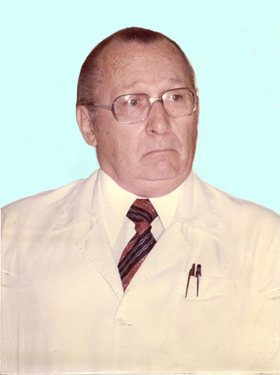
Memorial to Quintiliano H de Mesquita a Genius in Medicine of the 20th Century
Algumas partes do texto estão em português / Some small parts are in Portuguese language
 |
One of the major discoveries of Doctor Mesquita was the Myogenic Theory of Myocardial Infarction, developed in 1972. The Myogenic Theory supports the use of cardiac glycosides (cardiotonics) for the prevention and clinical treatment of acute coronary syndromes. Among other developments are the Ventricular Aneurism Surgery of the Heart performed by Charles Bailey in 1954 and the first diagnosis of Right Ventricular Infarction, in vivo, by ECG, made in 1958. (He did more than 30 pioneer contributions to medical literature) |
Photo, 1983
|
Major contributions by Doctor Mesquita to the Medical Science
1º case of ventricular aneurysmectomy performed by Charles P. Bailey (1954) (Heart Aneurysm Surgery)
-
1º case of right ventricular infarction with diagnosis realized in vivo inside new electrocardiographic patterns contradicting the cavity theory and confirming the vectorial theory (1958). (The Vectorial Theory)
1º case of unstable angina pectoris ceased as a immediate result of cardiotonic administration; Myogenic Theory confirmation (1972). (The Myogenic Theory)
Some Personal Communications to Dr. Mesquita referring to Myogenic Theory of Myocardial Infarction, to Heart Aneurysm Surgery by Bailey and about the first right ventricular infarction diagnosis:
Ary L. Goldberger - USA (1), Robert Roberts - USA (2), Frank I. Marcus - USA (3), M. S. Pathy - England (4), Bernard Lown - USA (5), Isabel Coma-Canella - Spain (6), J. Candell Riera - Spain (7), Myron Prinzmetal (8) - USA, Charles P. Bailey – USA (9)
Small history of the Myogenic Theory
Doctor Mesquita, who started clinical activities in 1941, very early (in 1954) experienced great frustration with the failure of anticoagulants as logical preventives for the myocardial infarction. Anticoagulants were abandoned worldwide after 1969, shaking down the classic thrombogenic theory as origin of the myocardial infarction.
In 1972, Doctor Mesquita developed the Myogenic Theory, in a pathophysiological basis where the origin of myocardial infarction is myogenic and not thrombogenic, as opposed to the stated by the classical theories. He started from that time to treat patients with cardiotonic drugs based on his myogenic theory, in a large success not equaled by the traditional treatment. Due to his concepts and results, Doctor Mesquita awarded in 1975 the "Ernst Edens - Traditionspreis", by the "Internationale Gesellschaft Für Infarktbekampfung" (International Society Against Myocardial Infarct), located in Stuttgart - Germany (1), and a special report by Bunte Magazine, Germany in 10/04/1980 (2). The Myogenic Theory of Myocardial infarction was presented at 'The International Conference of Advanced Cardiac Sciences' - The "King of Organs Conference, 2012", by Carlos Monteiro
Some other important contributions to electrocardiography
1948: Developed a new classification of “Incomplete Bundle Branch Block with the discovery of 2 new types of IBBB”. Republished on the Brazilian Cardiology Society website in 2002 at http://www.cardiol.br/tunel/ago/new/015.pdf ).Additional information at http://www.infarctcombat.org/arrhythmias-02.html
1999: Presented atthe I Virtual Congress of Cardiology a paper that confirms the Prinzmetal's Theory of Accelerated Conduction”. It was entitled “Exceptional Patterns of the Wolff-Parkinson-White Syndrome in Rhythm and AV Nodal Tachycardia” published at http://www.infarctcombat.org/qhm/tnn2346i.pdf
Contributions on Wolff-Parkinson-White Syndrome
Published many other papers about Wolff-Parkinson-White Syndrome, including in partnership with Myron Prinzmetal and Maurice Lev in 1961, at http://circ.ahajournals.org/cgi/content/abstract/24/1/41
Papers published in English at Internet:
-
Myogenic Theory of Myocardial Infarction - Book (download free of charge - Summary in English)
-
Myogenic Theory, CHD Cardiotonic Therapeutics, ECG diagnosis of Right Ventricular Infarction, etc.
-
Reinvigorating old ECG concepts: "Nodal AV Rhythm - maintenance of 3 morphological types"
-
Reinvigorating old ECG concepts: "Sino-Atrioventricular Symbiotic Rhythm (SA-AV) "
(Books, Titles and Bibliography at the end of the page)
Algumas homenagens póstumas
Apresentação da Teoria Miogênica do Infarto do Miocárdio durante a IV Conferência Internacional sobre Ciências Cardíaca Avançadas - King of Organs Conference, 2012, por Carlos Monteiro.
Tributo ao Doutor Quintiliano H. de Mesquita (1918 - 2000), publicado nos Arquivos Brasileiros de Cardiologia, Janeiro de 2001. "Após o falecimento, o tardio mas justo reconhecimento"
-
Homenageado pela Sociedade Paraibana de Cardiologia e SBC/PB que atribuíram ao melhor trabalho classificado nas apresentações de temas livres do IV Congresso Paraibano de Cardiologia o prêmio “Quintiliano Mesquita” – também no mesmo informativo da Sociedade Paraibana de Cardiologia de Maio de 2001 a publicação do artigo “Exemplo de Vida”, pelo Dr. Paulo Bezerra de Araújo Galvão.
-
Homenagem do Dr. Cláudio A S Baptista, através do artigo “Quintiliano de Mesquita: Um Princípio, Uma Luta” publicado no Jornal da Sociedade Brasileira de Cardiologia de Nov/Dez de 2000 e republicado em História da Cardiologia pela SBC, em seu site na Internet.
-
Quintiliano H de Mesquita: A História e a Luta de um Gênio da Medicina do Século XX, por Carlos Monteiro, 2003 (A história e a luta).
Prêmio Recebido e Importantes Homenagens em vida
A relação das contribuições realizadas pelo Doutor Mesquita para a Ciência Médica
Livro e Lista Parcial de Artigos publicados em Português na Internet:
-
Livro Teoria Miogênica do Enfarte Miocárdico (Download Gratuito!)
-
A Teoria Miogênica Explica ou "A Teoria Trombogênica Desabou e a Ortodoxia Não Notou"
-
Memórias sobre Nosso Abandono da Terapêutica Anticoagulante em 1954
-
Memórias sobre nossa contribuição para o estudo dos bloqueios de ramo
-
Memórias sobre nossa contribuição para o estudo da síndrome de Wolff-Parkinson-White
-
Memórias sobre nossa contribuição para o estudo do enfarte do ventrículo direito
-
Médico Brasileiro Cria Cirurgia que Deve Evitar o Transplante Cardíaco
Sua participação em importantes momentos da formação da cardiologia brasileira na década de 40 (Fotos)
-
Nos cursos intensivos de cardiologia do Hospital Municipal de São Paulo, sob a direção do Dr. Pazzanese
-
No curso de eletrocardiografia dado pelo Dr. Frank Norman Wilson, em 1942
-
Nos cursos de eletrocardiografia dados por ele no Instituto de Cardiologia do Hospital Matarazzo em São Paulo
Books
-
Arrhythmias - Imprensa Universitária, Universidade Federal da Paraíba, 1971
-
Myogenic Theory of Myocardial Infarction - Gemini, 1979 - ( download free of charge - Summary in English)
-
Informative bulletin: Infarct - How to treat and avoid it only with drugs, edited by the author, 1983
-
How to escape from coronary bypass surgery and myocardial infarct only with drugs - Icone, 1991
-
Boycotted drug replaces coronary bypass surgery - Compset, 1996
Bibliography:
-
Heart aneurysm. Presentation of case operated by Bailey, Rev Hospital N.S. Aparecida, 1956:9:151 with reprint by Rev Hospital Matarazzo numbers 3 and 4 - Volume IX, 1956
-
Anticoagulant and myocardial infarction. Publicações Médicas, 1962; 33:3
-
Contribution to the study about right ventricular infarction. Arq. Bras Cardiol, 1960; 13:162
-
Electrocardiographic aspects of right ventricular infarction. Arq Bras Cardiol, 1963;16:113
-
Effects of strophanthin K, by intravenous route, in treatment of clinical infarctioning picture and of myocardial infarction. Revta. Bras. Clin. Terap, 1973;2:647
-
Use of cardiotonic in treatment of angina pectoris and impending myocardial infarction syndrome, Revta. Bras. Clin. Terap., 1973; 5:309
-
Cardiotonic in the prophylaxis of myocardial infarction. Revta. Bras. Clin. Terap, 1976; 5:309
-
Functional preservation of ischemic myocardium by long time on use of cardiotonic. Medicina de Hoje, 1978; 154
-
Cardiotonic and acute myocardial infarction in man. Revta. Bras. Clin. Terap, 1981; 10:645
-
"QS" wave in right ventricular infarction: cavity theory and vectorial theory - Report of 2 cases, Arq. Bras. Cardiol, 1981; 36/2:125
-
The cardiotonic in chronic coronary disease and prevention of myocardial infarction Rev. Bras. Med, 1982; 39:359; Rev. Bras. Clin. Terap, 1982; 11:794
-
First myocardial infarction in silent chronic coronariopathy: angiographic coronary and ventriculographic aspects. Rev. Bras. Med. 1982; 39:427
-
The cardiotonic in intermediate coronary syndrome. Rev. Bras. Med. (Cardiologia), 1983; 2:317
-
A new and simplified electrocardiographic classification of acute myocardial infarction. Rev. Bras. Med. (Cardiologia), 1985; 4:34
-
Importance of age as a prognostic factor in acute myocardial infarction. Rev. Bras. Med. (Cardiologia) , 1985; 4:34
-
Association of proscilaridine-A and verapamil by oral route in treatment of unstable angina pectoris. Rev. Bras. Med. (Cardiologia), 1985; 4:99
-
Pathophysiological and therapeutics implications of acute myocardial infarction in view of coronary arteries either angiographically normal or with pervious stenotic lesions. Rev. Bras. Med. (Cardiologia), 1985; 4:187
-
Point of view. Why Myogenic Theory and Not Thrombogenic Theory. Arq. Bras. Cardiol. 1994;62 (4):271, Republished at Internet in 2003.
-
Electrocardiogram of right ventricular infarction. Historical and critical evolution. Ars Cvrandi, 1995;28:12-49
-
Unstable Angina: Atherosclerotic Etiology, Myogenic Pathophysiology and Cardiotonic Therapeutic. Ars Cvrandi, 1999;32: Monothematic in Cardiology (Part III)
-
Cardiotonic: Insuperable in preservation of myocardial stability as preventive of acute coronary syndromes and responsible for the prolonged survival. Study of almost 1200 cases - 28 years of follow-up, Ars Cvrandi, May 2002;35:3
-
Effects of cardiotonic + coronary dilator in stable coronary myocardiopathy, with or without previous infarction in the long run. Ars Cvrandi, September 2002;35:7
Titles:
-
Honorary Professor of Medicine from the Federal University of Paraíba state.
-
Founder and Chief of the Angiocardiology Institute of Matarazzo Hospital, 1945-1979.
-
Founder Membership of the Brazilian Society of Cardiology.
-
Founder Membership of the Brazilian Society of Angiology.
-
Distinguished Member of the Cardiology Society from Paraíba state.
-
Founder and Emeritus Member of the Academy of Medicine from Paraíba state.
-
Executive Director of Instituto de Combate ao Enfarte do Miocárdio 1999/2000 - São Paulo, Brazil.
-
Founder and member from the board of Infarct Combat Project 1999/2000
Instituto de Combate ao Enfarte do Miocárdio
Website: http://www.infarctcombat.org/